Ce grand chef d'oeuvre de Bo Cavefors vient s'ajouter à sa série de performances filmées. C'est lui-même l'auteur de cette performance corporelle qui a un titre français. Les quatre actants vont finir dans une impasse anticipée de passions et d'extase.
Le film est divisé en trois parties numerotées. Les dessins de biches et faons sont sur les trois débuts. Mais pourtant les trois suites ne seront pas du tout innocentes. Les quatres actants ne vont pas finir leurs prestations mais ils seront "finis" eux-mêmes.
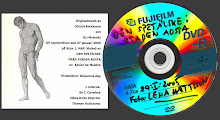
Le dessin d'André Masson avec le personnage d'Acéphale sert d'introduction. Le même dessin a été utilisé par Kaganof pour ses livres et pour ses performances aussi. Il vient des années 30 et de la collaboration de Masson avec le magazine "Acéphale", édité par Georges Bataille.
La première partie commence avec les quatre corps masculins nus en tableaux vivants. Un homme masqué est allongé par terre. Nous n'allons pas tarder à comprendre que c'est Cavefors lui-même. Un coeur charnel gît sur le sol entre Cavefors et un jeune homme nu reste assis sur une chaise. Les deux autres restent debout. La musique de Martin Bladh commence à souffler lentement. La caméra se met à observer les parties des quatre corps.
Une voix masculine se livre à une confession de phantasmes homosexuels en anglais. La voix est modifiée et les images sont sautillantes. Cavefors au milieu de la troisième partie du film commence à se caresser. Un homme-gardien nu vient de lui enlever le bonnet noir couvrant sa tête. Ce bonnet noir sera maintenant introduit à la tête de l'homme assis. Les ombres des performers et de leurs jeux érotiques sont projetés sur les murs. Cavefors fouette le jeune assis et se met à se masturber.
Sans point culminant, les actants seront "finis" et "achevés" dans une impasse d'extase. Ils seront consolés avec le dessin de Masson qui revient à la fin des 27 minutes du film.
Föredrag, den 18 september 2010, Malmö. KONSTATELJé E
I Ord. Kött. Språk. Kropp. Det går en skiljelinje mellan Ord och språk och mellan Kött och kropp. Skillnaden här är en åt-skillnad, en radikal frånvaro av förbindelse mellan Ord och språk, Kött och kropp. Likaså saknar vi förbindelsen mellan språk och Kött. Språket kan inte uttrycka köttets inslutenhet i kosmos, i inkarnationen – språket är ett språkande, språket språkar, som Heidegger säger – det säger ingenting om någonting.
Det är tanken som rör språket mot mening, eller: det är Ordet, det absoluta, som liksom gudens namn inte kan uttryckas. Ordet är meningens bärare och tankens ande, språket vore nonsens utan det. Vad grundar vi frånvaron av förbindelse mellan Ord och språk, kropp och Kött i? Mer exakt: i frånvaron av den sexuella relationen. Det finns ingen sexuell relation, säger Lacan. I sexuationsformeln, en obskyr tillämpning av predikatlogiken och den matematiska mängdläran, finner Lacan att det finns två sidor, en och den Andra, och att det inte finns någon förbindelse mellan ”dessa” två.
Cavefors on Cavefors Johannes Flink’s interview with Bo for Tidningen Kulturen.
For decades on end Bo Cavefors was, by far, Sweden’s foremost alternative publisher. As a publisher, his attitude was one of curiosity and fearless exploration, expressed in the long list of radical titles (including Mao, Nietzsche, Jünger, Dali, Lautréamont, Marx, Pound, Pasolini, etc.) edited at his Bo Cavefors Bokförlag. His own magazine Svarta Fanor (Black Flags), along with his parallel German and Swedish edition of the texts of the Red Army Fraction, remain unique and unsurpassed events in a publishing climate otherwise marked by complacence and cowardice. Educated by the Jesuits in England and ever an engaged catholic, Cavefors has constantly perceived matters from an international perspective vastly divergent from the provincial concerns prevalent in Swedish culture. Always siding with the intellect against power, always longing for transgression, he remained in some ways marginal despite the magnitude of his contribution to the Swedish book-publishing scene. However, for those of us who agree that the duck-pond is too small for our spirits, Cavefors will always remain a key figure of Swedish radicalism.
Arousing somewhat less attention, so far, is Bo’s series of short memoir books (even if they are gradually acknowledged by the critics) and the performance art he has developed over the last few years. For this reason, I wanted to ask him some questions about these subjects and to give him a chance to explain his own artistic development to a wider audience. I wanted to put his history as a publisher to the side for a while, to focus instead on the man, the author and the artist Bo Cavefors, and to ask him about his present … and his future …
Welcome Bo Cavefors! My first question is simply what you are doing right now? What I’m after, however, is not just a definition of your present activities. Rather, I would like to know if you are sensing a definitive direction in your artistic development, and, if so, a direction from what beginning to what end? What is it that you hope to explore by your recent and present activities?
Over the last years, I have clearly noted a return to my all-embracing, adolescent pre-occupations from … let’s say from my teenage years and up to my thirties. And this applies both to my writing – where it is specifically obvious in my three plays Rebellion in the Kasbah, Sade and the Japanese and The Leper in Aosta – and to the films I have written, acted out and produced in collaboration with Martin Bladh. My interest in the theatrical mode of presentation, in speech and acting as they are performed on a stage, emerged during my school years. I did my first performance in the first grade, in my Latin school in Malmö, when I was asked to read my home assignment to the rest of the class. It was a relief to suddenly stand there in front of the others and feel that they actually had to listen to what I had to say ... I guess it gave me the childish kick of manipulation… And the thing went on...>>>> CONT.>>>>>>>


 '





 Posts


